Read Time: 10 min
Most home offices fail not because of a lack of effort, but because they were designed around a showroom floor rather than a daily routine. For remote workers, executives, and professionals spending forty or more hours a week at a desk, the subtle friction of a mass-produced workspace compounds quickly. A desk that sits just one inch too high causes persistent neck and shoulder tension. A surface that lacks depth forces dual monitors uncomfortably close to your eyes. Cables tangle across footrests, power strips clutter floor space, and generic bookshelves leave awkward dead zones in alcoves or under sloped ceilings.
When you transition from a temporary work-from-home setup to a permanent workspace, off-the-shelf furniture reveals its inherent limitations. Mass-market options are manufactured to broad, average dimensions using veneer-wrapped particleboard engineered for low-cost flat-pack shipping rather than decades of daily use. Once a laminate edge chips or a composite desktop bows under the weight of monitor arms, repair is virtually impossible.
Designing a custom workspace shifts the focus from adapting your body to a desk to designing a desk around your body, your equipment, and your daily workflow. By choosing custom home office furniture crafted from solid hardwood, you eliminate daily ergonomic friction while investing in an heirloom-quality workspace built to your exact spatial and functional requirements.
TL;DR / Quick Summary
Designing a custom home office in solid wood aligns your physical workspace with your daily work habits, eliminating ergonomic pain points while creating a durable, heirloom-quality environment.
Key Takeaways:
- Workflow-Driven Design: Tailor desk depth, surface area, and storage to your screen setup, document load, and daily movement patterns.
- Precision Engineering: Custom sizing eliminates awkward room gaps and accommodates heavy monitor arms without surface flexing or cracking.
- Built-In Technology: Conceal power strips, wire bundles, and charging hubs seamlessly into solid hardwood during the fabrication process.
- Long-Term Value: Solid hardwood construction outlasts mass-market composite furniture and can be refinished for generations of use.
Assess Your Workflow Before You Design Anything
Before selecting wood species, edge profiles, or stain finishes, a successful home office design begins with an honest audit of your daily habits. How you physically interact with your workspace dictates every structural decision.
Screen Setup and Visual Ergonomics
A single laptop requires a vastly different surface footprint than a triple-monitor array or an ultra-wide curved display. If you rely on multiple screens, heavy-duty monitor arm mounts exert significant clamping pressure on the back edge of a desk, a stress point that can crack or warp composite materials over time, but is easily accommodated by solid hardwood.
Movement and Physical Stance
Consider whether your workflow demands seated concentration, frequent standing, or a dynamic combination of both. Incorporating ergonomic mechanics into solid wood designs ensures you maintain ideal posture without sacrificing classic woodworking aesthetics.
Video Conferencing and Acoustics
Remote work demands clean visual backgrounds and quiet acoustic environments. Position your desk relative to natural light sources to prevent screen glare and unflattering backlighting. Unlike lightweight or hollow laminate panels, heavy solid wood furniture doesn’t rattle or vibrate when exposed to desk speakers, typing, or ambient office noise.
Storage vs. Display Needs
Do you manage physical documents, sensitive client files, and heavy reference books, or is your workflow entirely cloud-based? Understanding your ratio of hidden storage (lateral file drawers, locked cabinets) to open display space (bookshelves, accent shelving) ensures every square inch of your office serves a distinct purpose.
Evaluating these variables makes designing a custom wood desk in Pennsylvania the logical choice. Rather than modifying your habits to fit a rigid catalog item, custom crafting allows every drawer, grommet, and surface dimension to match your exact routine.
Desk Configuration: Size, Shape, and Surface Area
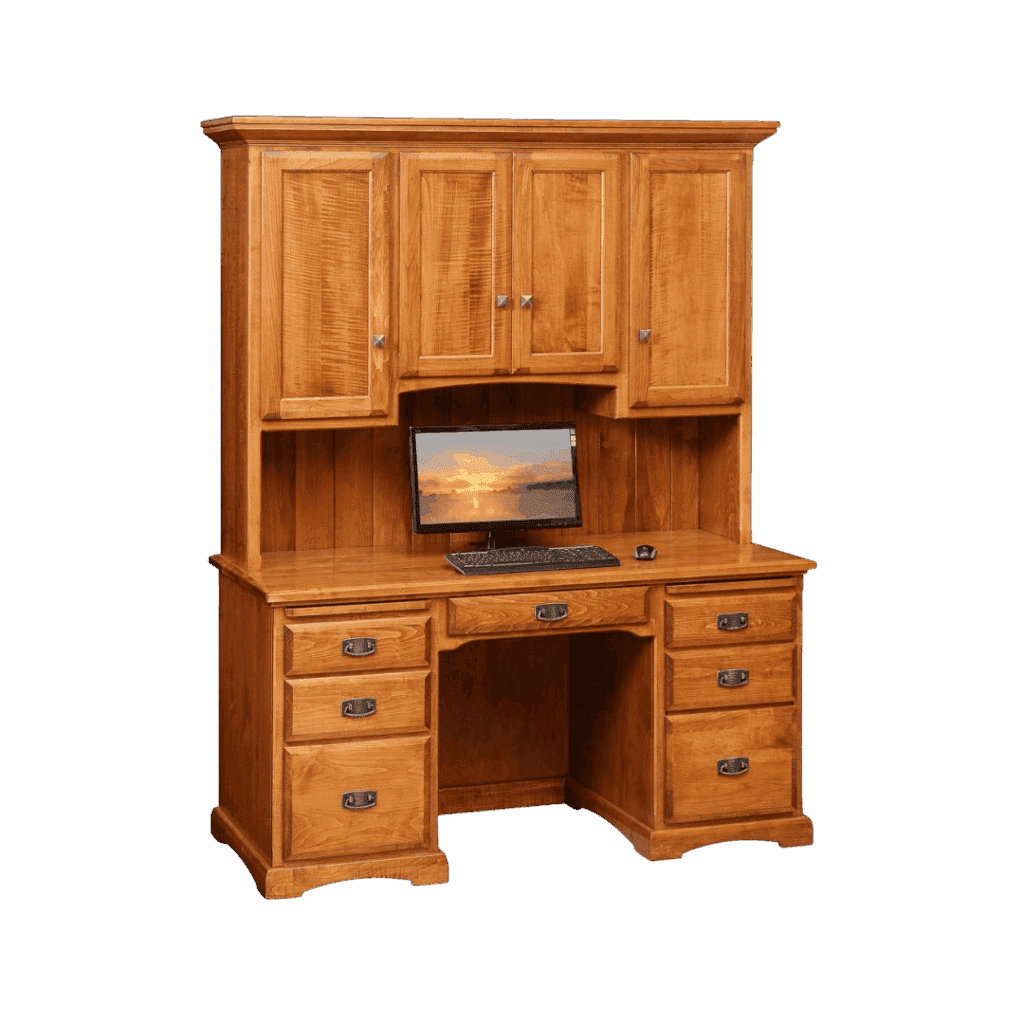
The desk surface is the anchor of your productivity. Standard commercial desks typically offer depths of 24 to 30 inches, which often proves insufficient once you add a keyboard, mouse pad, monitor stands, and document trays.
- Standard Depth and Proportions: A custom depth of 32 to 36 inches provides critical eye-to-screen focal length, reducing eye strain and allowing ample space for forearm support.
- L-Shape and Executive Layouts: For multi-screen power users or professionals who host in-person meetings, L-shaped or return desks create clear zone separation, dedicating one primary wing to computer tasks and the secondary return to printers, scanning equipment, or reference materials.
- Sizing to the Exact Inch: Standard manufactured furniture leaves awkward 6-inch or 12-inch gaps against walls and corners, collecting dust and wasting valuable square footage. Custom fabrication allows your desk to extend precisely wall-to-wall or fit seamlessly into architectural nooks.
Whether you are configuring a solid wood home office desk in PA or a multi-piece executive suite, matching dimensions to your physical room layout ensures maximum long-term comfort and efficiency.
The Custom Advantage: Building to Last from the Start
When investing in a permanent workspace, the distinction between true solid hardwood construction and mass-market alternatives comes down to structural integrity and craftsmanship. Mass-produced furniture relies on pressed wood fibers held together with synthetic glues and finished with paper-thin wood veneers. Once worn, chipped, or exposed to moisture, these materials cannot be repaired.
Solid hardwood construction responds differently to time and use. Traditional joinery techniques such as hand-cut dovetail drawer boxes, mortise-and-tenon framing, and full-extension soft-close ball-bearing slides ensure that drawers hold heavy file loads without sagging or binding.
Understanding the benefits of custom solid wood means evaluating how materials age over decades of continuous use. Solid wood can be refinished, repaired, and re-stained, growing richer in character over time. Learning the fundamentals of identifying quality hardwood involves inspecting end grain, verifying solid drawer bottoms, and examining structural frame joinery rather than superficial surface finishes.
At Blue Ridge Furniture, we adhere to time-tested woodworking principles passed down through generations. Our custom home office furniture is designed to serve your current career while remaining a lasting family heirloom for the next generation.
Built-In Storage: The Custom Advantage
Storage design dramatically impacts both room aesthetics and floor plan efficiency. Homeowners often debate between freestanding bookshelves and custom built-in wall units.
Opting for built-in home office solid wood designs turns underutilized alcoves, sloped attic rooms, or corner walls into high-density storage solutions. By matching the wood species and finish of your built-ins to your central desk, your office achieves a cohesive, architectural aesthetic.
Cable Management and Modern Workflow Integration
Nothing disrupts the refined look of a solid wood desk faster than a maze of exposed power cords, Ethernet cables, and monitor wires. Traditional furniture treats cable management as an afterthought, forcing users to clip plastic brackets or stick adhesive hooks onto finished surfaces.
Custom craftsmanship integrates modern technology directly into the wood structure during fabrication:
- Precision Grommets: Solid wood grommet caps, turned from the exact same board as the desktop, conceal wire pass-throughs cleanly.
- Under-Desk Cable Trays and Channels: Carved channels and mounted hardwood wire troughs route power bricks and surge protectors entirely out of sight.
- Integrated Power Hubs: Desktop pop-up outlets, USB-C fast-charging ports, and wireless charging pads can be flush-mounted directly into the hardwood surface.
Planning cable channels during your initial custom process walkthrough ensures your workspace remains clutter-free while keeping essential power connections within arm’s reach.
Choosing Wood for a Home Office

Selecting the right hardwood desk custom species establishes the visual tone and durability profile of your workspace. Each timber offers distinct grain patterns, density, and color depth.
- American Black Walnut: Celebrated for its rich brown tones, complex grain character, and executive presence. Walnut provides a warm, sophisticated aesthetic that deepens over time.
- Hard White Maple: Dense, heavy, and exceptionally durable. Maple features a clean, subtle grain pattern ideal for contemporary, bright home offices seeking modern minimalism.
- Red and White Oak: Renowned for prominent grain patterns and classic durability. Oak brings traditional warmth, high scratch resistance, and timeless regional character to Pennsylvania home offices.
- Finishing and Surface Protection: Daily office use subjects desk surfaces to warm coffee mugs, heavy equipment, and constant forearm friction. Finishing solid wood with commercial-grade post-catalyzed conversion varnish creates a clear, durable seal that resists spills, heat rings, and UV discoloration while showcasing the natural wood grain.
Exploring our full range of Customization options allows you to combine your preferred wood species with custom edge profiles from clean straight edges to soft bullnose or live-edge slabs and hand-rubbed stains tailored to your home’s decor.
What You Can Handle vs. When to Call a Pro
Building a functional home office involves balancing spatial planning with specialized craftsmanship.
Tasks Most Homeowners Can Do
- Workflow & Space Mapping: Measuring room dimensions, listing required equipment, and testing natural light angles throughout the day.
- Cable Organization: Sorting power cords by device, labeling power bricks, and managing external peripheral connections.
Tasks for Confident DIYers
- Basic Surface Refinishing: Sanding minor surface scratches on existing solid wood pieces and applying protective furniture wax.
- Modular Shelf Assembly: Mounting lightweight wall shelves into wall studs using standard level and anchor tools.
When to Call a Professional
- Custom Ergonomic Furniture Fabrication: Designing and handcrafting solid hardwood desks with integrated power routing, dovetail drawer joinery, and specialized finishes.
- Seamless Architectural Built-Ins: Sizing and installing wall-to-wall cabinetry, crown molding integrations, and flush-mounted desk units in uneven or historic rooms.
Common Home Office Design Mistakes to Avoid

1. Sizing a Desk Based on Catalog Norms Rather Than Real Equipment
What people do wrong: Purchasing a standard 24-inch deep desk without measuring the depth of dual monitors, keyboards, and wrist rests.
Why it’s a problem: Screens end up too close to the user, causing chronic eye strain, headaches, and forced poor posture.
The right approach: Measure your equipment footprint first and commission a desk with 32 to 36 inches of surface depth.
2. Treating Cable Management as a Post-Purchase Afterthought
What people do wrong: Relying on stick-on plastic clips or letting cords dangle behind solid wood back panels.
Why it’s a problem: Adhesive clips damage wood finishes over time, and dangling wires create visual clutter and vacuum hazards.
The right approach: Plan pass-through grommets, routed wire channels, and under-desk power trays during the initial furniture design stage.
3. Choosing Soft Wood Species for Heavy Daily Work Surfaces
What people do wrong: Selecting soft pine or low-density woods for a primary daily work desk to save on initial material costs.
Why it’s a problem: Ballpoint pens, laptop edges, and coffee cups easily dent and gouge soft woods, ruining the writing surface.
The right approach: Invest in dense hardwoods like Hard Maple, White Oak, or American Black Walnut sealed with conversion varnish.
Conclusion
A home office should be more than a temporary place to set a laptop—it should be an inspiring, highly functional environment built around how you actually work. By investing in handcrafted custom home office furniture, you eliminate daily workspace friction and build an environment tailored to your long-term comfort and productivity.
Build your ideal workspace with Blue Ridge Furniture. Explore custom solid wood collections handcrafted in Honey Brook, PA, to last a lifetime.
Based in Honey Brook and serving Lancaster County, Chester County, and surrounding Pennsylvania areas, Blue Ridge Furniture ships worldwide with delivery available up and down the East Coast.
Frequently Asked Questions
What size desk do I need for a home office?
A standard single-monitor workstation requires a minimum desktop footprint of 48 inches wide by 28 inches deep. For dual-monitor setups, printer placement, and comfortable paper management, a desktop measuring 60 to 72 inches wide by 30 to 36 inches deep is recommended.
What is the most durable wood for a desk surface?
Hard Maple and White Oak are durable domestic hardwoods due to their high density and resistance to denting. When paired with a commercial conversion varnish finish, American Black Walnut and Cherry also offer exceptional longevity for daily office tasks.
Can I get built-in bookshelves from the same wood as my desk?
Yes. Custom crafting allows your entire home office suite, including central desk, lateral file cabinets, credenzas, and wall-mounted bookshelves, to be built from matching lumber runs to ensure uniform grain character and finish color.
How do I manage cables in a solid wood desk?
Cable management is built directly into the desk during fabrication through custom-drilled desktop grommets, under-desk hardwood wire channels, and flush-mounted power hubs.
What’s the lead time for a custom home office desk?
Lead times for handcrafted solid wood furniture typically range from 6 to 12 weeks, depending on design complexity, wood species selection, and current workshop production schedules in Honey Brook, PA. Contact us for a more precise estimate based on what you want.
Is a standing desk possible in solid wood?
Yes. Solid hardwood tops can be fitted to heavy-duty, dual-motor electric lift bases, giving you modern sit-stand functionality paired with authentic hardwood craftsmanship.
Sources
- USDA Forestry Service Wood Handbook — Essential information on wood as an engineering material
- Occupational Safety and Health Administration (OSHA) — inexpensive principles that will help you create a safe and comfortable computer workstation