Read Time: 9 min
Think back to the pieces of furniture in your life that carry genuine memories. It is rarely the flat-pack bookshelf bought for a college apartment or the trendy veneer coffee table ordered off a flash-sale website. Instead, it is the solid oak dining table where three generations gathered for Thanksgiving dinner, showing the subtle, beautiful patina of decades of family toasts.
There is a profound difference between furniture you temporarily own and furniture that holds a permanent place in your family story. In today’s disposable economy, we have been conditioned to accept the fast-furniture cycle: buy cheap, assemble with hex keys, watch it wobble within four years, and send it to a landfill during your next move.
If you are tired of replacing furniture every few years, this guide will help you identify true heirloom furniture. You will learn the exact structural criteria, from interlocking joinery to quality hardwoods, that separate disposable decor from pieces your grandchildren will one day proudly inherit.
TL;DR / Quick Summary
Investing in heirloom-quality furniture breaks the expensive fast-furniture replacement cycle by choosing pieces engineered to survive generations of daily family life.
Key Takeaways:
- Joinery over Fasteners: True heirloom pieces rely on mortise-and-tenon and dovetail woodworking joints rather than staples, glue, or cam-lock hardware.
- Solid Hardwood: Genuine longevity requires dense domestic hardwoods like Walnut, Oak, Maple, or Cherry.
- Repairable Finishes: Catalyzed conversion varnishes and deep oil finishes protect wood fibers while allowing spot repairs and refinishing decades down the line.
- High-Impact Priority: Focus your heirloom budget on heavy-use anchor pieces like dining tables, bedroom dressers, armoires, and storage chests.
The Fast Furniture Problem: Why Most Modern Pieces Don’t Last 10 Years
To understand what makes a piece heirloom-grade, it helps to examine why modern retail furniture fails so rapidly. Mass production over the last thirty years shifted away from longevity and toward shipping efficiency and visual imitation. High-volume manufacturers prioritize pieces that look magnificent in a catalog photo shoot, but compromise entirely on structural substance.
Most showroom furniture today is constructed from Medium-Density Fiberboard (MDF) or particleboard. This consists of compressed sawdust bound with synthetic resins and covered by a paper-thin wood veneer. While MDF resists initial warping, it possesses little structural resilience against moisture, weight, or mechanical stress.
When exposed to normal household humidity or an accidental liquid spills, particleboard swells, delaminates, and loses structural integrity. Once a corner crushes or a screw hole strips out of the particleboard, it cannot be reliably repaired.
Furthermore, fast-furniture pieces are held together by metal cam-lock fasteners, dowels fixed with minimal glue, or hidden staples. Every time a table is bumped or a drawer is pulled open, subtle leverage is applied to those thin fasteners. Over 36 to 60 months, the pre-drilled holes widen, the joints loosen, and the frame begins to rack irreparably.
What Makes a Piece Truly Heirloom-Grade: 4 Structural Criteria
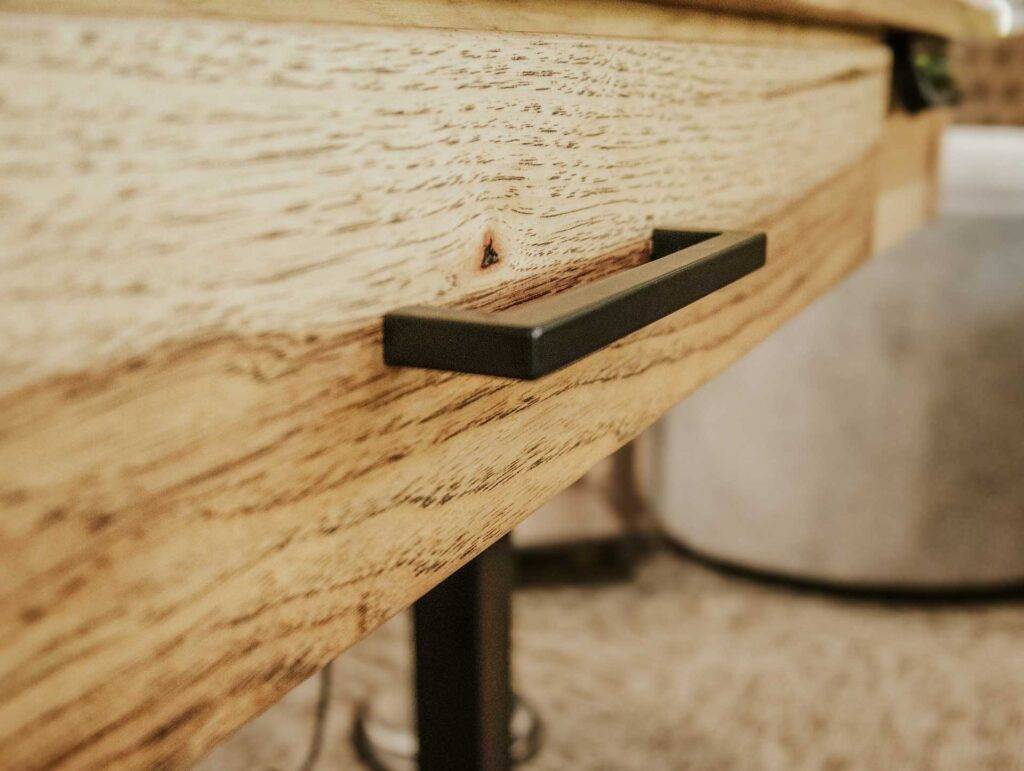
Identifying furniture built to last does not require a degree in woodworking. It simply requires knowing where to look and what questions to ask. When evaluating furniture in a showroom or custom workshop, examine these four non-negotiable structural criteria.
1. Interlocking Woodworking Joinery
The primary point of failure in any furniture is the joint. Heirloom craftsmen rely on wood-to-wood interlocking joinery that uses the natural structural tension of timber to lock components together.
- Dovetail Joints: Look closely at the corners of drawer boxes. True heirloom dressers feature English or French dovetail joinery with interlocking trapezoidal pins and tails that mechanically resist being pulled apart.
- Mortise-and-Tenon Joints: This classic joint inserts a carved wooden peg (tenon) into a corresponding square hole (mortise) in the receiving post. It is the gold standard for connecting table legs to aprons and bed frames to corner posts.
- Floating Frame-and-Panel: Solid wood naturally expands and contracts as seasonal humidity changes. Floating construction allows central wood panels to shift subtly inside their frame without splitting or warping the outer cabinet.
2. Solid Hardwoods
Not all real wood is suitable for heirloom construction. Softwoods like pine or fir split and dent easily under daily family use. Heirloom craftsmen build exclusively with dense domestic hardwoods such as Walnut, Maple, Oak, and Cherry.
Equally important is how timber is cured. Quality builders utilize lumber that has been carefully kiln-dried to a stable internal moisture level of 6% to 8%. This prevents structural twisting, checking (cracking), or seam separation years after the piece enters your home.
3. Repairable, Deep-Penetrating Finishes
A factory spray-finish on mass-market furniture acts like a hard plastic shell over the wood. Once chipped or scratched, moisture creeps beneath the plastic barrier, flaking the finish off in sheets that require harsh chemical stripping to fix.
In contrast, heirloom finishes soak deep into the wood fibers to protect the timber from within. Catalyzed conversion varnishes preserve the natural warmth of the grain while offering superior resistance to water rings and heat marks. Crucially, high-grade finishes allow for localized touch-ups and eventual refinishing decades down the road.
4. Heavy-Duty Hardware & Full-Extension Glides
Touch the hardware before making a purchase. Solid wood heirloom pieces utilize heavy-gauge solid brass, forged iron, or steel hardware rather than hollow stamped metal.
When opening drawers, check for full-extension, heavy-duty under-mount drawer glides. The drawer box should be constructed from solid wood on all four sides and the bottom panel, operating smoothly without twisting or sagging when fully extended.
Which Furniture Pieces Are Worth Buying Heirloom Quality?
Investing in solid wood furniture is a deliberate, step-by-step process. You do not need to replace every item in your home overnight. Prioritize high-impact anchor pieces that bear physical loads and anchor daily family routines.
Priority Tier 1: High-Impact Anchor Pieces

- The Dining Room Table: The ultimate communal anchor of the home. A solid wood dining table endures hot dishes, homework sessions, holiday feasts, and crafts. A well-built table can be sanded and refinished multiple times over a century.
- Bedroom Dressers & Armoires: Dressers experience constant mechanical force on their drawer glides and frame joints. A solid hardwood dresser with dovetail drawers will never collapse under heavy clothing or suffer from sticking drawers. Read more about selecting the perfect furniture for your bedroom here.
- Heirloom Chests & Sideboards: Storage chests and dining credenzas serve as functional art. Because their structural footprints remain classic across design eras, they seamlessly transition across generations.
- Solid Wood Bookcases & Desks: Books and office equipment are deceptively heavy. Particleboard shelves notoriously sag within two years, while solid oak or maple shelving supports hundreds of pounds indefinitely without deflection.
Priority Tier 2: Accent & Secondary Pieces
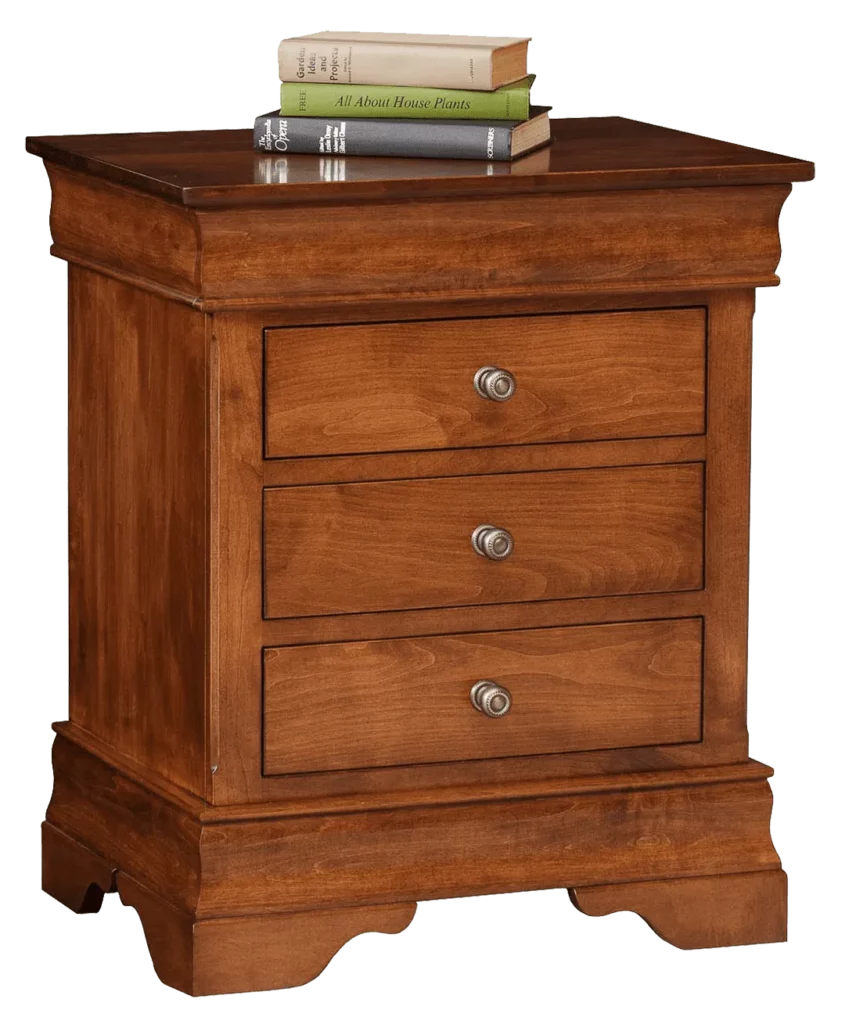
Accent items like end tables, nightstands, and entryway consoles carry lighter physical loads. While solid hardwood versions add cohesive beauty to your home, they can be acquired secondary to your primary anchor pieces.
How to Care for Solid Wood Furniture Long-Term
Even the finest custom furniture that lasts generations requires thoughtful stewardship to ensure its longevity across a century. Caring for solid hardwood is simple once you understand how real timber reacts to its environment.
Maintain Relative Indoor Humidity (40%–45%)
Wood remains a porous material long after it leaves the craftsman’s bench, absorbing and releasing airborne moisture as seasons change. During winter months, home heating systems dry out the air; if humidity drops below 30%, solid wood can contract, potentially opening small hairline seams. Using a humidifier protects both your woodworking and indoor air quality. During humid summer months, air conditioning helps keep relative humidity below 60% to prevent drawer binding.
Daily Cleaning & Dusting Routine
Avoid commercial aerosol sprays containing silicone or ammonia. Silicone creates a sticky film that attracts dust and prevents future finish touch-ups.
- Weekly Dusting: Wipe surfaces with a soft microfiber cloth dampened slightly with clean water.
- Occasional Cleaning: For sticky spills, use a drop of mild dish soap mixed into warm water, wiping dry immediately with a soft towel.
- Protection: Always use coasters under cold drinks and trivets under hot serving dishes to prevent thermal shock and liquid rings.
Common Heirloom Furniture Buying Mistakes to Avoid
1. Falling for “All-Wood Construction” Marketing Labels
What people do wrong: Assuming the phrase “all-wood construction” guarantees solid hardwood.
Why it’s a problem: In marketing terminology, particleboard and MDF are technically classified as wood products because they contain compressed wood fibers.
The right approach: Ask specifically if the piece is made from 100% kiln-dried solid hardwood throughout, including drawer sides and back panels.
2. Overlooking Drawer Glides and Joinery Details
What people do wrong: Judging a dresser solely by its exterior wood color and knob style.
Why it’s a problem: Decorative knobs can be replaced in two minutes, but stapled drawer boxes and plastic glide tracks will fail within a few years of daily use.
The right approach: Pull the drawer completely out and inspect the corner joint for interlocking dovetails and solid wood side construction.
3. Choosing Trendy Finishes Over Timeless Grain
What people do wrong: Selecting ultra-trendy paint colors or heavily distressed artificial finishes that age poorly.
Why it’s a problem: Extreme trend finishes quickly look dated and often conceal lower-grade wood defects beneath thick paint coats.
The right approach: Select natural oil or clear varnish finishes that highlight the innate character of hardwoods like Walnut, Cherry, or Oak.
The Custom Advantage: Building Furniture to Last Generations

When you buy mass-market furniture off a retail floor, you accept predetermined compromises: fixed dimensions, mystery wood cores, imported hardware, and automated assembly lines.
Choosing custom solid wood furniture flips this dynamic entirely. You select the exact timber species, hand-pick the finish tone, specify proportions tailored to your space, and select hardware that aligns with your home’s architecture.
In our experience crafting custom furniture in Lancaster County, every piece that leaves our workshop is built with the next owner in mind. We do not build for temporary retail trends; we build for the family living room fifty years from today.
Conclusion
Choosing to buy once furniture Pennsylvania craftsmen create allows you to break free from the costly fast-furniture loop. By inspecting pieces for interlocking joinery, solid hardwoods, repairable finishes, and heavy-duty hardware, you ensure that every furniture purchase represents a true multi-generational investment.
If you are ready to invest in pieces that carry your family’s story forward, explore our showroom or schedule a consultation with our woodworking team. We are here to help you select or design the perfect solid wood anchor pieces for your home. Contact us today for a custom quote.
Explore Blue Ridge Furniture’s custom solid wood collections built in Honey Brook, PA, to last a lifetime.
Based in Honey Brook and serving Lancaster County, Chester County, and surrounding Pennsylvania areas, Blue Ridge Furniture ships worldwide with delivery available up and down the East Coast.
Frequently Asked Questions
What makes furniture heirloom quality?
Heirloom quality furniture is defined by 100% solid hardwood construction, traditional interlocking woodworking joinery (such as mortise-and-tenon and dovetail joints), repairable finishes, and heavy-duty hardware. Unlike mass-produced furniture built from particleboard and staples, heirloom pieces are engineered to be repaired, refinished, and passed down across generations.
How can I tell if furniture is solid wood or veneer?
You can identify solid wood vs. veneer by checking the grain continuity along the board edges. On solid wood, the end-grain on the side of a panel continuously matches the top surface grain pattern, whereas veneer displays flat edge-banding. Additionally, solid hardwood is significantly heavier than particleboard and displays natural wood grain variations on its unfinished undersides.
What wood is best for furniture that lasts generations?
Dense domestic hardwoods such as Walnut, Maple, Oak, and Cherry are best for generational furniture. These species possess high density, exceptional tensile strength, and superior resistance to impacts and denting compared to softwoods like pine.
How do I care for solid wood furniture long-term?
Maintain indoor relative humidity between 40% and 45% to minimize natural wood expansion and contraction. Clean surfaces regularly with a soft cloth dampened with clean water and mild soap while avoiding aerosol polishes containing silicone. Always use coasters under liquids and trivets under hot items.
Is custom furniture worth the investment over retail?
Yes, custom solid wood furniture offers a lower total cost of ownership over time. While retail fast furniture must be replaced every 3 to 7 years due to broken joints or swelling particleboard, a single custom solid wood piece lasts 50 to 100+ years without needing replacement.
What joints are used in high-quality solid wood furniture?
High-quality solid wood furniture uses traditional interlocking joints, including dovetail joints on drawer box corners, mortise-and-tenon joints on table legs and bed frames, and dado or groove joints for solid shelving support. These mechanical connections distribute stress through the wood fibers rather than relying on superficial nails or glue.
Sources:
- Purdue Extension – A guide to the shrinking and swelling of wood and its effect on furniture