Read Time: 8 min
You have finalized the dimensions, agreed on the silhouette, and decided to invest in a dining table or bedroom set built to last generations. Then your furniture maker asks a deceptively simple question: “Which wood species would you like to build this in?”
Suddenly, what was supposed to be an exciting design milestone feels like a materials science exam. You are handed wood swatches, shown grain boards, and asked to weigh the merits of white oak versus black walnut, or hard maple versus black cherry.
Selecting the right wood species dictates how your piece holds up to daily life, how its color and luster evolve over decades, and how it fits your home’s aesthetic. This guide compares North America’s four premier furniture hardwoods so you can choose the right timber with confidence.
TL;DR / Quick Summary
Choosing the right hardwood balances daily surface wear, natural color evolution, and room functionality to ensure your piece lasts for generations.
Key Takeaways:
- Hard Maple (1,450 lbf Janka): The hardest and brightest of the four hardwoods featured here, ideal for heavy-use desks, kitchen tables, and minimalist contemporary interiors.
- White Oak (1,360 lbf Janka): Exceptional dent resistance with bold ray-fleck grain, making it the premier choice for busy family dining rooms.
- Black Walnut (1,010 lbf Janka): A luxury dark hardwood that develops an amber patina over time, perfect for centerpiece tables and bedroom suites.
- Black Cherry (950 lbf Janka): A smooth, heirloom timber that oxidizes from light salmon to deep reddish-brown over its first 5 to 10 years.
What Wood Hardness Actually Means for Furniture
When evaluating hardwood species, furniture makers measure surface durability using the Janka hardness scale. Developed by the USDA Forest Products Laboratory, the Janka test calculates the force (in pounds-force, or lbf) required to embed a 0.444-inch steel ball halfway into a wood sample.¹ The higher the rating, the more resistant the board is to everyday dings, fork drops, laptop corners, and pet claws.
Why You Shouldn’t Over-Engineer Hardness
A common misconception among first-time buyers is that you must always choose the hardest wood available. Maximum hardness matters for kitchen tables and active writing surfaces, but far less for low-impact pieces like dressers, nightstands, and armoires.
Even black cherry, the softest of the four core hardwoods at 950 lbf, is more than twice as hard as common commercial softwoods like Eastern white pine (380–420 lbf), which is exactly why we never use pine in our workshop. For low-traffic furniture, prioritize color, grain character, and visual warmth over sheer Janka numbers.
Oak: The Reliable All-Rounder
Oak is the historic backbone of American furniture craft, prized for structural stability, approachable cost, and rich tactile texture. White Oak and Red Oak are the two primary options, with white oak serving as the modern standard for organic, Scandinavian, and transitional styles.
Grain Character and Daily Durability
Oak’s prominent, open-pore grain gives it a distinct texture under hand. At 1,360 lbf, white oak easily handles heavy dinnerware, hot dishes on trivets, and active kids, and its pronounced grain conceals minor micro-scratches better than smoother timbers.
Quarter-Sawn vs. Flat-Sawn Oak
How an oak log is milled changes its visual presentation. Flat-sawn boards, milled parallel to the growth rings, create sweeping “cathedral” patterns. Quarter-sawn (or rift-sawn) boards, milled perpendicular to the rings, yield straight, tight grain lines and expose medullary rays, producing a shimmering “ray fleck” figure while maximizing dimensional stability against seasonal humidity swings.
Walnut: The Premium Choice
American Black Walnut is widely regarded as North America’s premier domestic cabinet hardwood; the only native species that grows naturally in deep brown and espresso tones without artificial stains.
Natural Tone and Figure
Walnut offers complex visual depth, blending espresso, mocha, and smoky undertones, with a tight, silky, flowing grain that frequently shows natural curls and burls near branch junctions.
Why Walnut Carries a Higher Price Point
Walnut trees yield a smaller percentage of usable dark heartwood relative to their pale cream sapwood. In our experience, sourcing wide, defect-free walnut boards with consistent dark coloring requires meticulous sorting and premium grading reflected in the final investment.
How Walnut Ages Over Time
Unlike most domestic species, walnut lightens over decades. Ambient light exposure gently softens its deep espresso tones into a warm, lustrous amber-chocolate patina.
Cherry: The Long-Game Wood
Pennsylvania Black Cherry is celebrated for its satiny texture, subtle grain, and dramatic oxidation. When you buy cherry, you’re investing in a material that keeps evolving alongside your home.
The 5-to-10-Year Oxidation Journey
Fresh cherry furniture leaves the workshop with a delicate, golden-pink hue. Because cherry is intensely photosensitive, it oxidizes rapidly under ambient light:
- Months 1–6: The pink tone transitions into a warm honey-cinnamon.
- Years 2–5: The grain deepens into a luminous amber-auburn.
- Years 5–10+: The wood reaches its mature, reddish-brown heirloom patina, a depth no synthetic stain can replicate.
Pitch Pockets
Cherry’s smooth, closed grain is punctuated by small black resin flecks and gum pockets, natural marks left where sap once pooled in the living tree, and a reliable sign of genuine, unbleached American black cherry.
Maple: Clean, Contemporary, Hard
If your home aesthetic leans Scandinavian minimalism, modern farmhouse, or crisp contemporary, Hard Sugar Maple delivers unmatched structural hardness and bright, clean visuals.
Bright Aesthetics and Minimal Grain
Maple is the lightest in color of the four hardwoods here, ranging from bright cream to pale straw, with a tight, fine, understated grain that lets architectural silhouettes and joinery take center stage.
Extreme Surface Hardness
Rated at 1,450 lbf, hard maple is the densest timber in this group, the same density prized for commercial butcher blocks and bowling alleys. For a writing desk that resists pen impressions or a kitchen table built for daily abuse, maple is unbeatable.
Hardwood Furniture Species Comparison Matrix
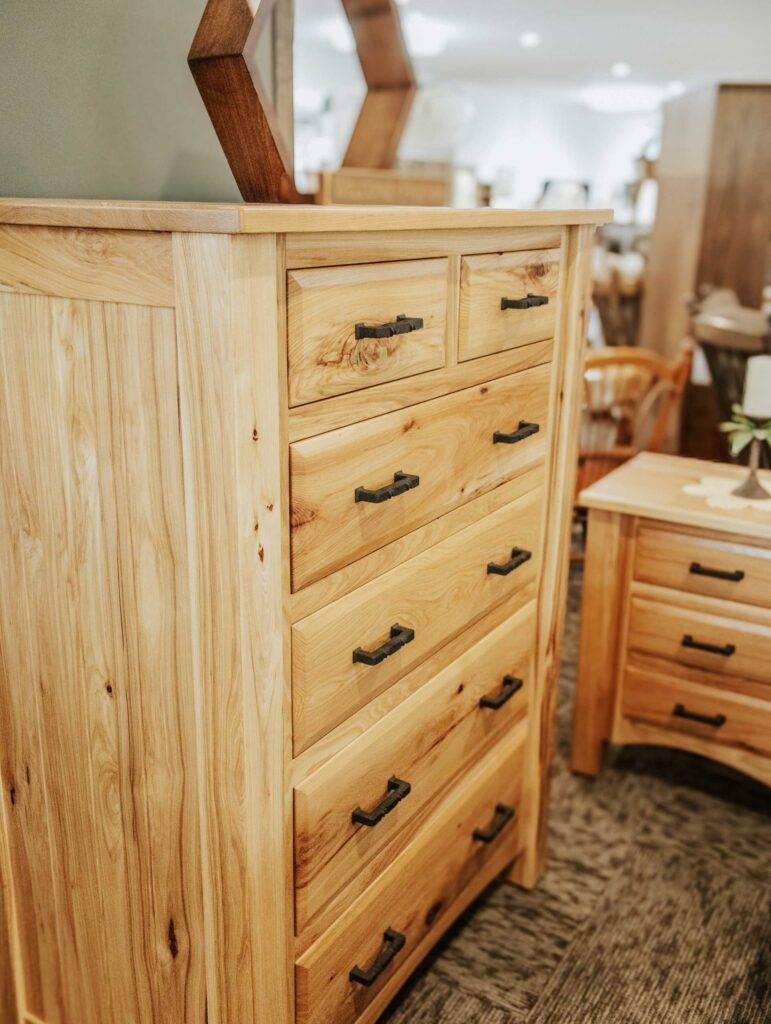
| Decision Factor | White Oak | Black Walnut | Black Cherry | Hard Maple |
| Janka Hardness | 1,360 lbf | 1,010 lbf | 950 lbf | 1,450 lbf |
| Natural Color Range | Light tan to biscuit | Deep chocolate/mocha | Pink-gold to rich auburn | Cream to pale straw |
| Grain Texture | Open, tactile, bold | Tight, silky, flowing | Fine, satiny, subtle | Dense, uniform, smooth |
| Aging Behavior | Gently ambers | Softens to warm honey | Darkens significantly | Slowly warms to gold |
| Relative Cost Tier | Mid-Range ($$) | Premium ($$$$) | Mid-to-High ($$$) | Accessible ($$) |
Matching Species to Room and Use Case
- High-Traffic Dining Room: For daily family dinners and homework sessions, White Oak provides the scratch and dent resistance active homes need. For a formal entertaining centerpiece, Black Walnut delivers unmatched visual drama.
- Primary Bedroom: Black Cherry brings an evolving warmth that makes bed frames and nightstands feel deeply rooted; Hard Maple creates a crisp, serene aesthetic instead.
- Home Office: Desks face concentrated pressure from monitor clamps and writing. Hard Maple and White Oak provide the surface density to prevent permanent indentation.
- Live Edge Statement Pieces: Walnut offers dramatic contrast, cream sapwood framing dark chocolate heartwood, while white oak provides massive single-slab widths.
What You Can Handle vs. When to Call a Pro
Understanding how wood species behave helps you maintain your furniture properly while knowing when a craftsman’s intervention is needed.
Tasks Most Homeowners Can Do
- Routine Dusting: Wipe surfaces weekly with a damp microfiber cloth and mild dish soap; avoid aerosol polishes containing silicone.
- Managing Humidity: Keep indoor relative humidity between 35% and 55% year-round to minimize wood expansion and contraction.²
- Fading Protection: Rotate centerpieces and placemats on fresh cherry furniture for the first 6 months to prevent uneven sun spots.
Tasks for Confident DIYers
- Minor Scuff Buffing on Oil Finishes: A 0000-grade steel wool pad with maker-approved maintenance oil blends out superficial scuffs.
- Seasonal Fastener Adjustments: Tighten table-base mounting bolts each autumn as indoor heating dries the surrounding air.
When to Call a Professional Craftsman
- Deep Gouges & Impact Dents: Correcting severe dents in dense maple or quarter-sawn oak without creating low spots requires professional steam-raising and re-sanding.
- Refinishing Aged Clear Coats: Stripping and spraying conversion varnish requires clean-room equipment and ventilation.
- Structural Joint Separation: If humidity swings cause a tabletop seam or breadboard end to separate, call a professional immediately before cracks spread.
Common Wood Selection Mistakes to Avoid
1. Staining a Light Wood to Imitate a Dark Species
What people do wrong: Ordering inexpensive wood and applying a dark walnut stain to cut costs.
Why it’s a problem: Maple absorbs dark pigment unevenly, creating a blotchy appearance, and scratches show bright unstained wood beneath.
The right approach: Build with natural walnut for deep brown tones, or embrace maple and oak’s natural character with a clear finish.
2. Ignoring Natural Wood Aging and Light Exposure
What people do wrong: Placing fresh cherry or walnut furniture beneath unshaded south-facing windows without rotating decor.
Why it’s a problem: Cherry develops permanent “light shadows” around stationary lamp bases within weeks.
The right approach: Let cherry oxidize evenly for 6 to 9 months before leaving heavy decor in fixed positions.
3. Choosing Softwoods for High-Wear Surfaces
What people do wrong: Choosing pine, cedar, or poplar for an active dining table to save money.
Why it’s a problem: Softwoods dent under fingernail pressure and gouge quickly under dinnerware and pens, which is exactly why we never use these species.
The right approach: Invest in true American hardwoods for any surface that sees daily contact.
4 Questions to Ask Your Maker Before Finalizing Your Build

- Is your lumber kiln-dried to 6–8% moisture content? This keeps the wood stable so it won’t warp, cup, or split in a climate-controlled home.
- Can I see physical finish samples on raw boards of my chosen species? Finishes look drastically different across open-grain oak versus closed-grain cherry.
- How do you grade and select sapwood for walnut pieces? This clarifies whether your build features uniform dark heartwood or natural blonde sapwood streaks.
- How does species selection affect build timeline and cost? Understanding lumber grading and availability prevents budget surprises.
Conclusion
Choosing between oak, walnut, cherry, and maple comes down to balancing how you live with how you want your space to feel. For a bustling family dining room, white oak and hard maple provide unmatched structural strength. For rich visual warmth and heirloom beauty in a bedroom or formal space, black walnut and aging cherry deliver unmatched character.
Take time to evaluate physical samples in your home’s natural lighting before committing to a species. When built with properly seasoned Pennsylvania hardwoods and time-tested joinery, any of these four will serve your family for generations.
If you’re ready to explore species options in person, visit our showroom in Honey Brook. We work with all four domestic hardwoods every day and are happy to guide you through raw lumber selections and finish options.
Based in Honey Brook and serving Lancaster County, Chester County, and surrounding Pennsylvania areas, Blue Ridge Furniture ships worldwide with delivery available up and down the East Coast.
Frequently Asked Questions
What is the most durable wood for a dining table?
Among the hardwoods most commonly used in furniture, hard sugar maple (1,450 lbf) and white oak (1,360 lbf) offer the best resistance to dents, scratches, and daily dinnerware impact.
What is the difference between oak and walnut furniture?
Oak is harder (1,290–1,360 lbf), lighter in color, features an open, textured grain, and is moderately priced. Walnut is softer (1,010 lbf), naturally dark brown, features a silky grain, and commands a premium price due to lumber scarcity.
Does cherry wood furniture darken over time?
Yes. Black cherry is naturally photosensitive and darkens significantly, oxidizing from a light golden-pink into a deep reddish-brown patina over 5 to 10 years of ambient light exposure.
Which wood is best for a home office desk?
Hard maple and white oak. Their density prevents permanent impressions from pens and resists scuffs from monitor arms and keyboards.
Is maple or oak harder?
Hard sugar maple (1,450 lbf) is harder than both white oak (1,360 lbf) and red oak (1,290 lbf). Both comfortably exceed hardness requirements for residential furniture.
What wood ages the best for heirloom furniture?
Black cherry and black walnut develop the most coveted patinas — cherry deepens into a rich red-brown, while walnut softens into a warm amber-chocolate over decades.
How do I choose between wood species for custom furniture?
Evaluate your room’s daily traffic, lighting, and aesthetic goals. Choose dense oak or maple for heavy-use tables and desks; choose warm walnut or cherry for bedroom suites and statement pieces.
Related Resources
- A Homeowner’s Guide for the Price of Custom Furniture
- Beyond the Standard Rectangle: How to Design a Custom Table That Fits Your Family
- Solid Wood Bedroom Furniture: A Buyer’s Guide to Heirloom Quality and Custom Design
- What Happens After You Say “I Want Custom”: A Look Inside Blue Ridge Furniture’s Workshop
Sources
1. USDA Forest Products Laboratory, Wood Handbook — hardness testing methodology cited for the Janka scale
2. Farmer’s Almanac — cited for indoor humidity guidance (35–55%)